
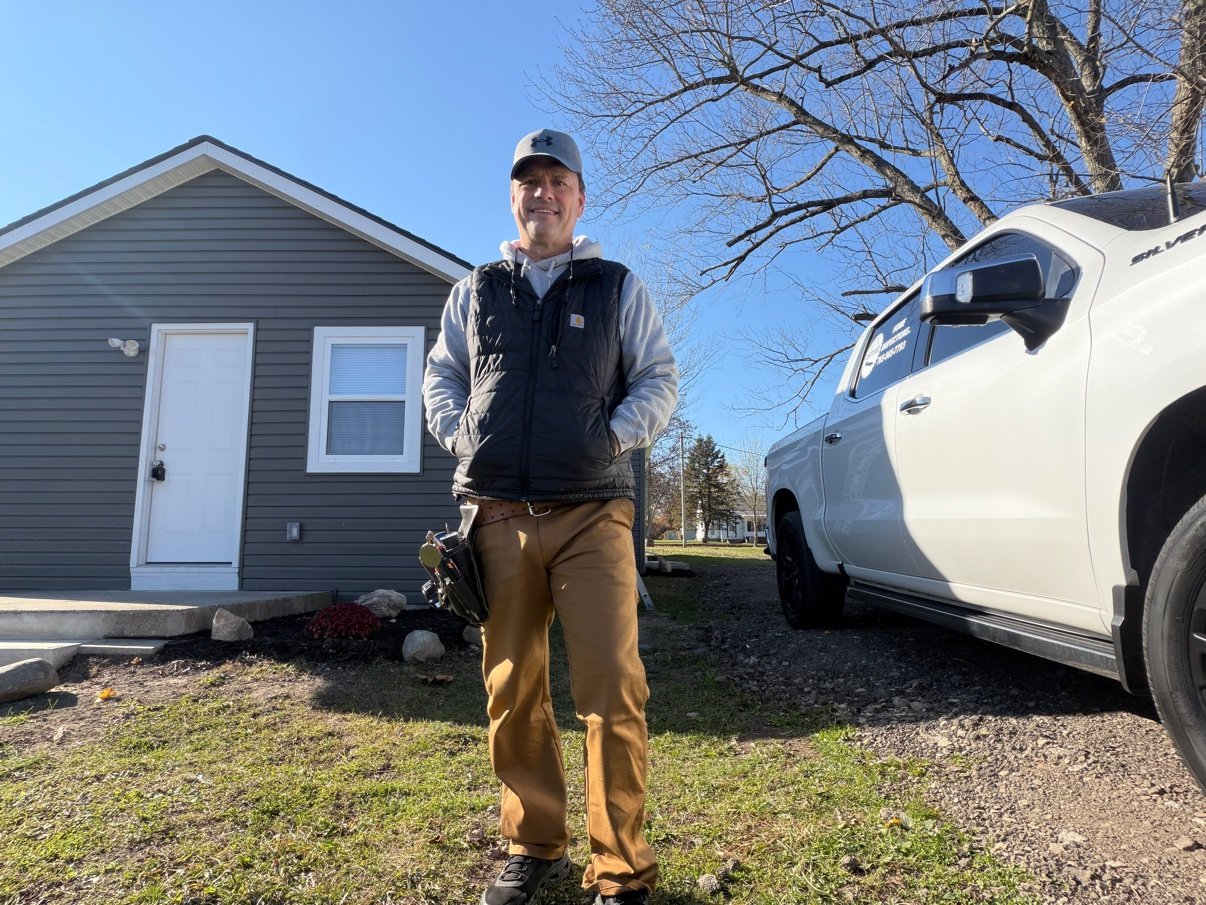
We were in Lynn today for a home inspection, and it seemed like a good time to show what an inspection actually looks like from the inside. Lynn’s housing is a mix of older in-town homes and rural properties, and no two are alike — which is exactly why the inspection walks the whole house, system by system, instead of going by first impressions. Every photo in this post is from today’s job.
Start in the attic
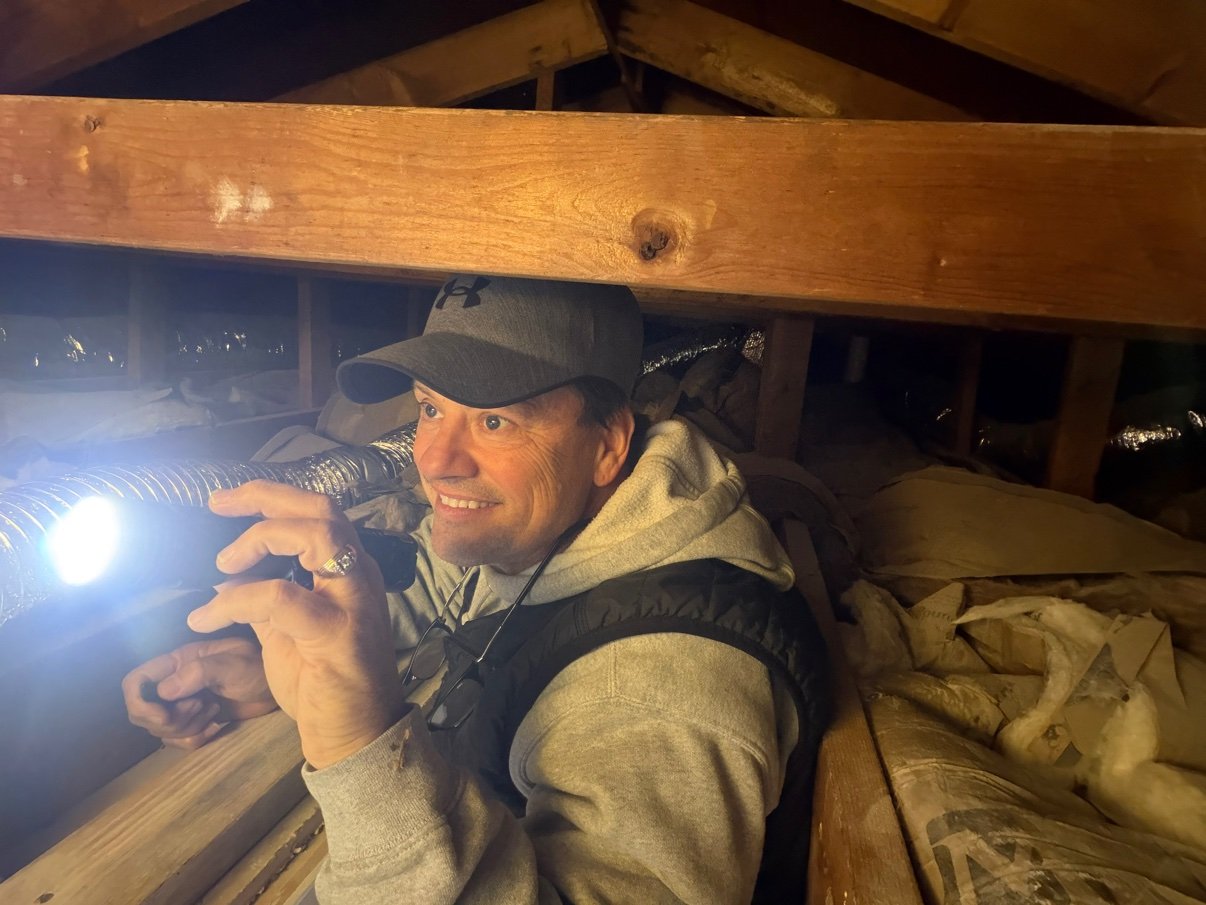
The attic tells you things the living space cannot. From up here we can see the underside of the roof deck, the insulation, the ventilation, and the ductwork runs — all in one pass.
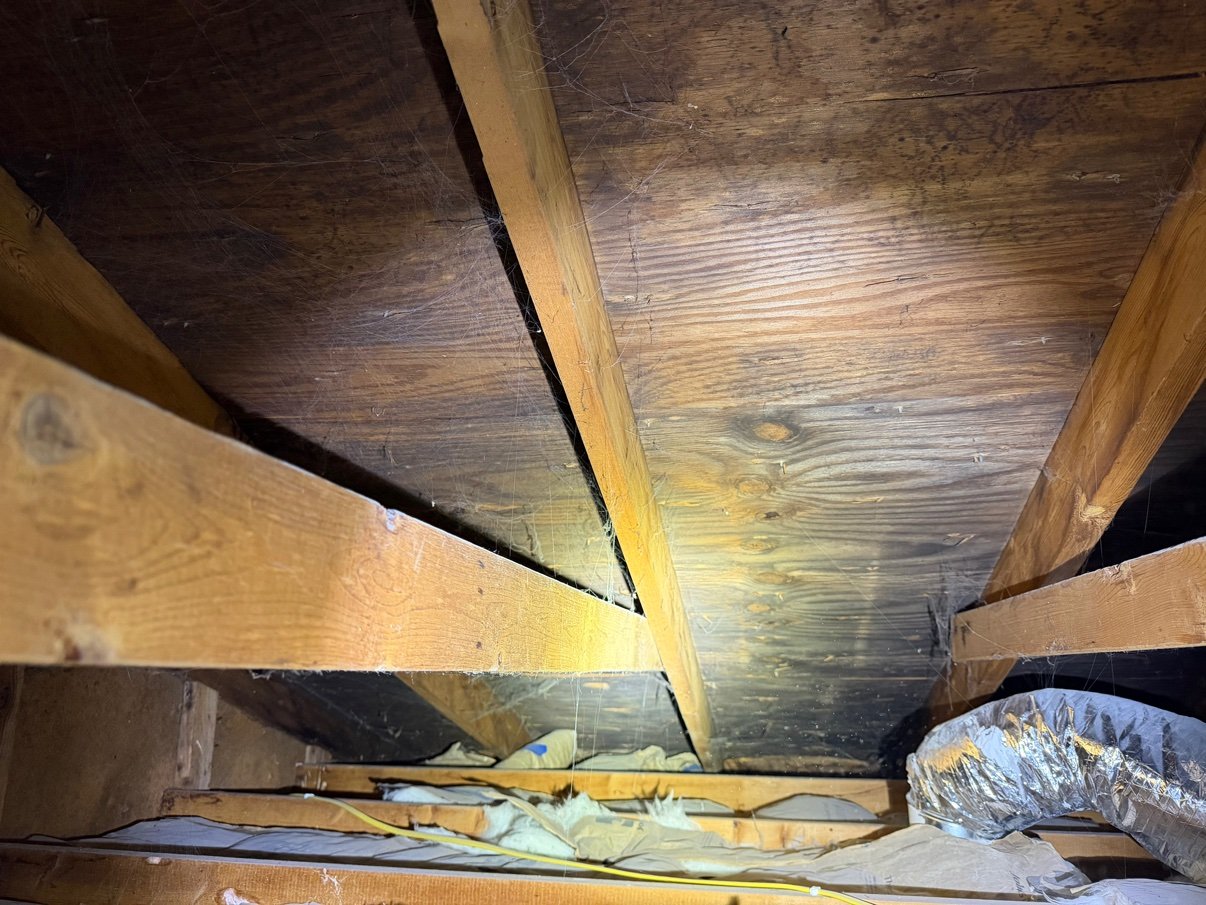
This attic shows why the check matters. The roof deck here has dark staining across the sheathing — the result of poor attic ventilation. Warm, moist air from the house rises into the attic, and when the ventilation is not moving enough air through the space, that moisture condenses on the cold underside of the roof deck, season after season. Left uncorrected, the staining is only the visible part: sustained moisture works on the sheathing and the framing over time. The fix starts with ventilation — getting air moving from the soffits up and out — and it is far cheaper than replacing roof decking.
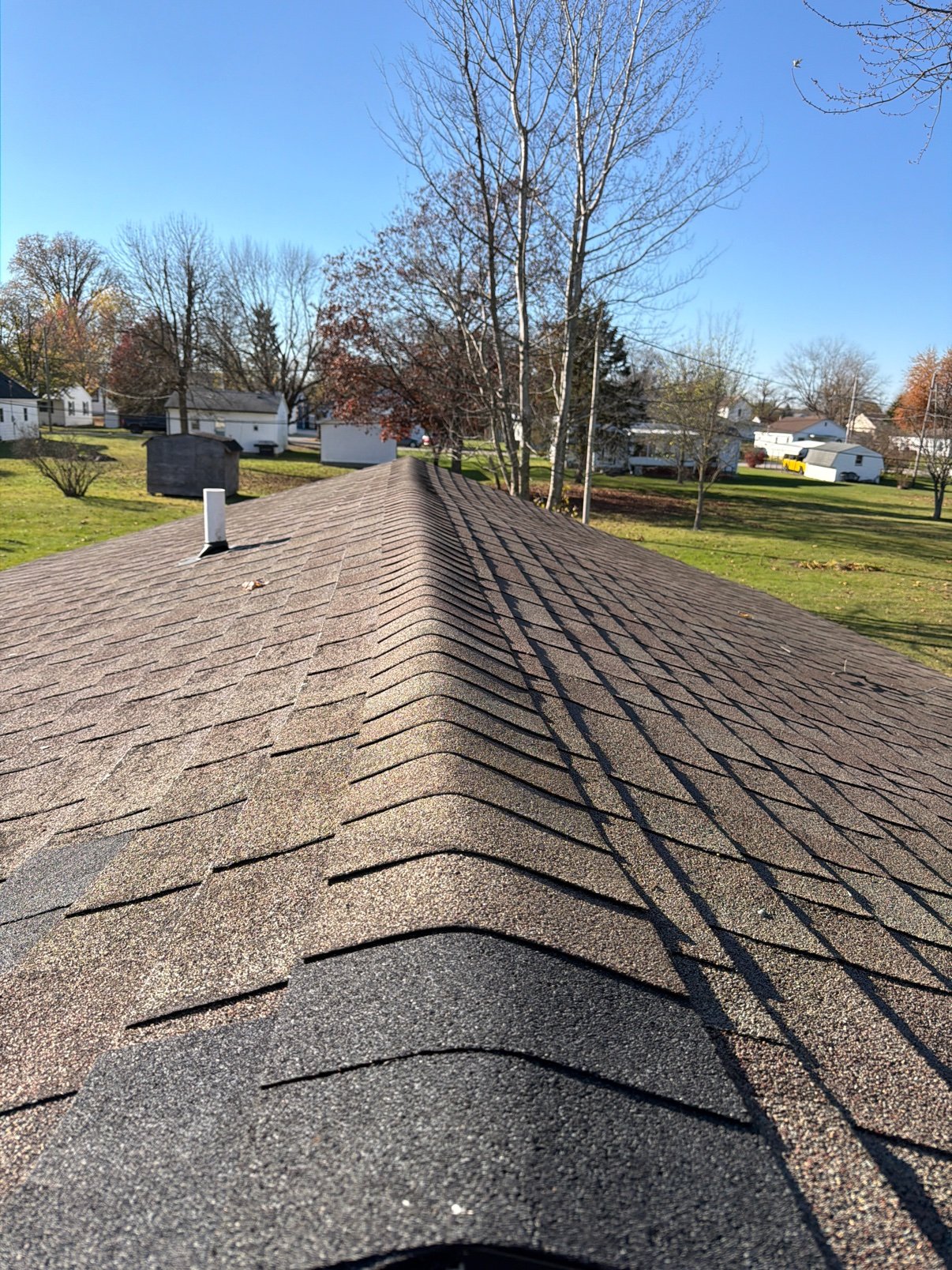
From the roof side, the cause is plain: the ridge is capped with shingles, but there is no ridge vent. Attic ventilation works as a loop — air in at the soffits, out at the top — and without an exit at the ridge, the loop never gets going. Adding exhaust ventilation at the ridge, with soffit intake to feed it, is what turns an attic like this from a moisture trap into one that breathes.
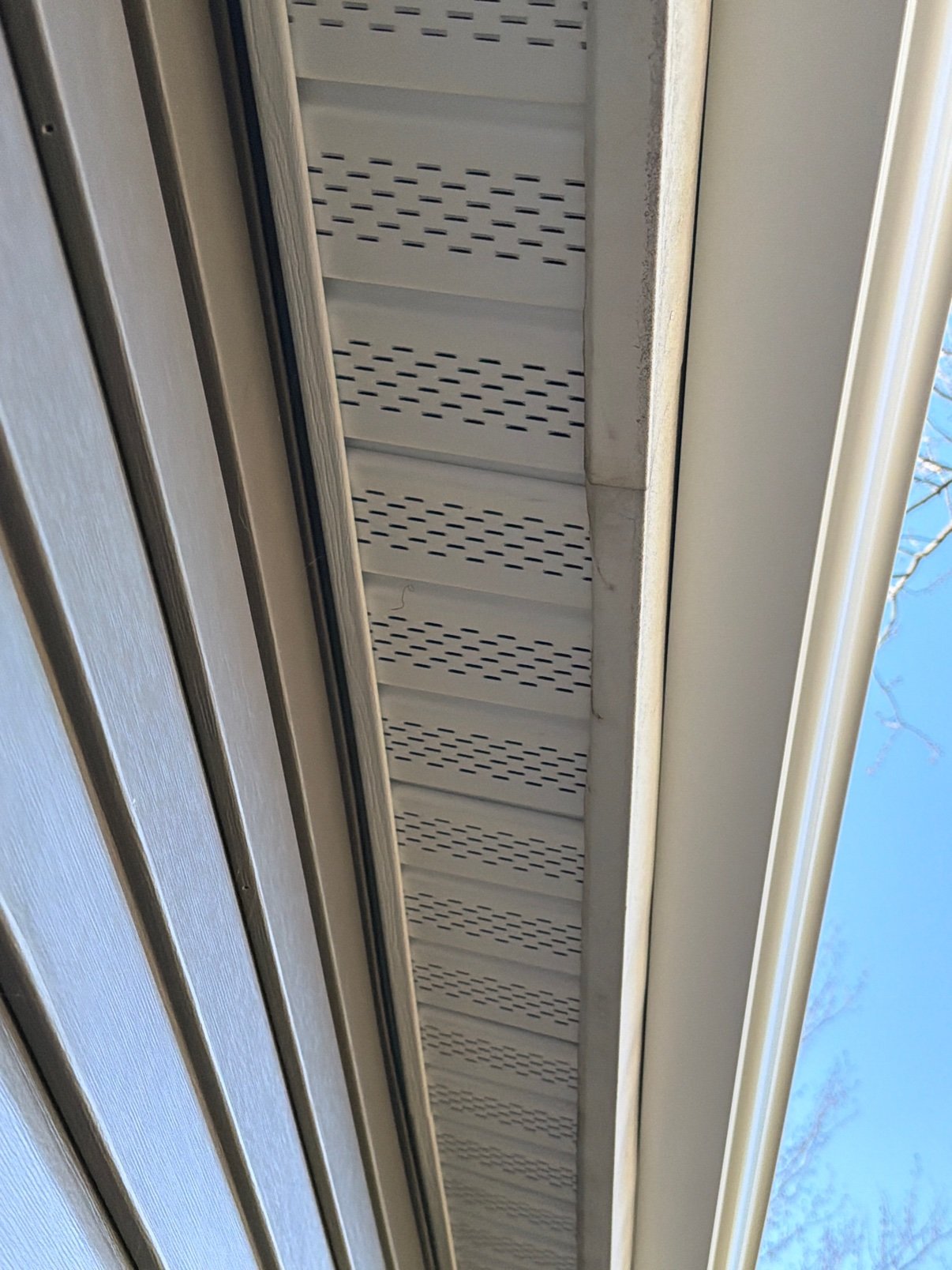
The intake end is no better. In the attic photos above, insulation is stuffed into the eave area — right over the soffit vents that are supposed to feed air in at the bottom of the loop. From the outside, the soffit is perforated, as this photo shows — the intake vents were built in. They just never reach the attic, because the insulation blocks them from the inside. Blocked at the bottom and closed at the top, the air in this attic barely moves, and the sheathing shows it.
We also check how much insulation is actually there and whether it is spread evenly or bunched and missing in places, and we look at how the bath fans and ducts terminate — a duct that ends in the attic instead of outside it pumps warm, moist air into exactly the space that needs to stay dry. None of this is visible from the rooms below, and it is some of the most useful information in the report.
Up on the roof
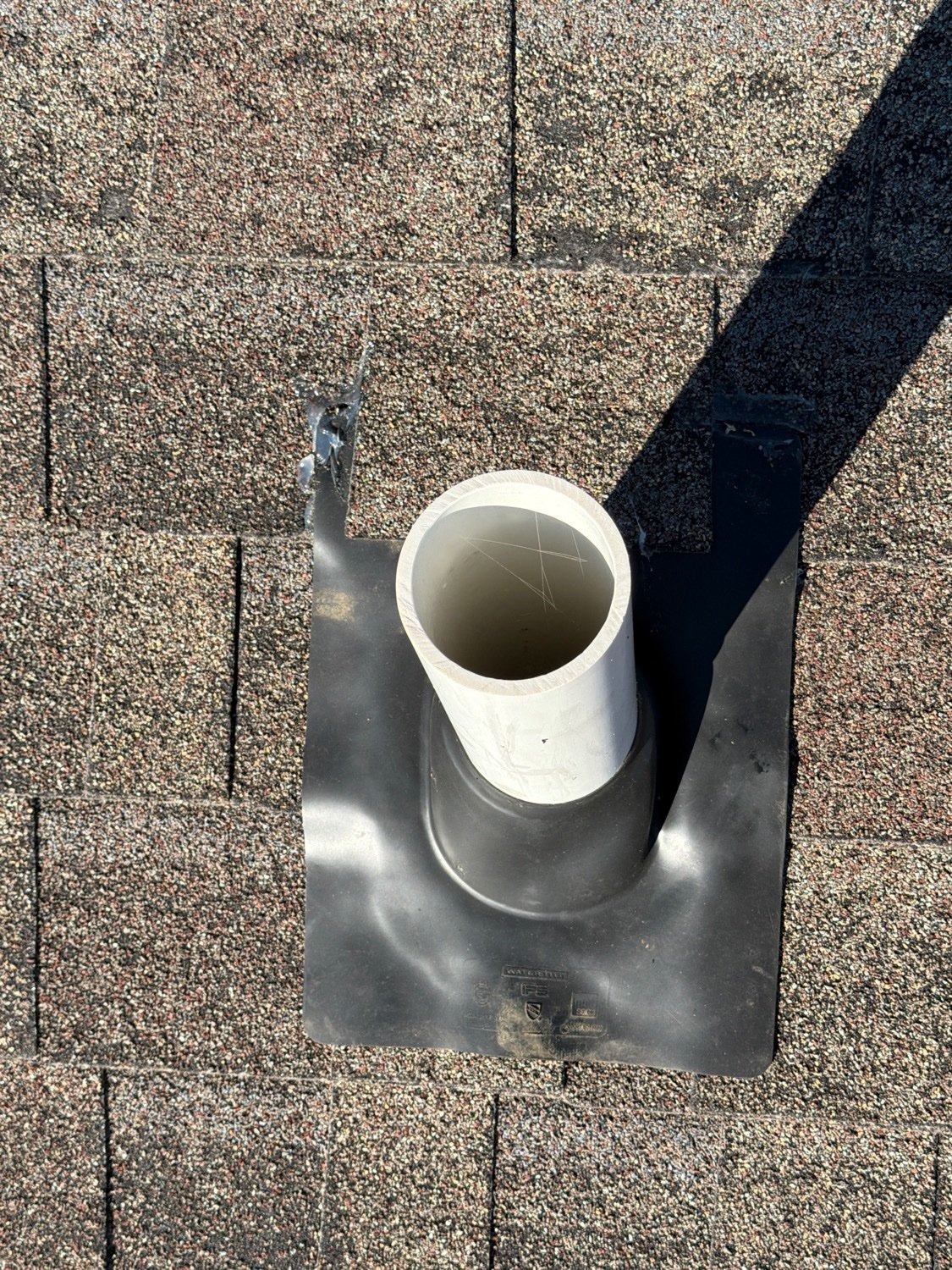
The roof had findings of its own. The plumbing vent’s flashing sits on top of the shingles around its full perimeter. The top edge of that flashing is supposed to tuck under the shingle course above it, so water running down the roof sheds over the flashing and past the pipe. Sitting on top, the joint depends on sealant to keep water out — and the sealant at the edges is already failing. Sealant is a maintenance item, not a waterproofing system; when it lets go, the penetration leaks into the roof deck and the attic below.
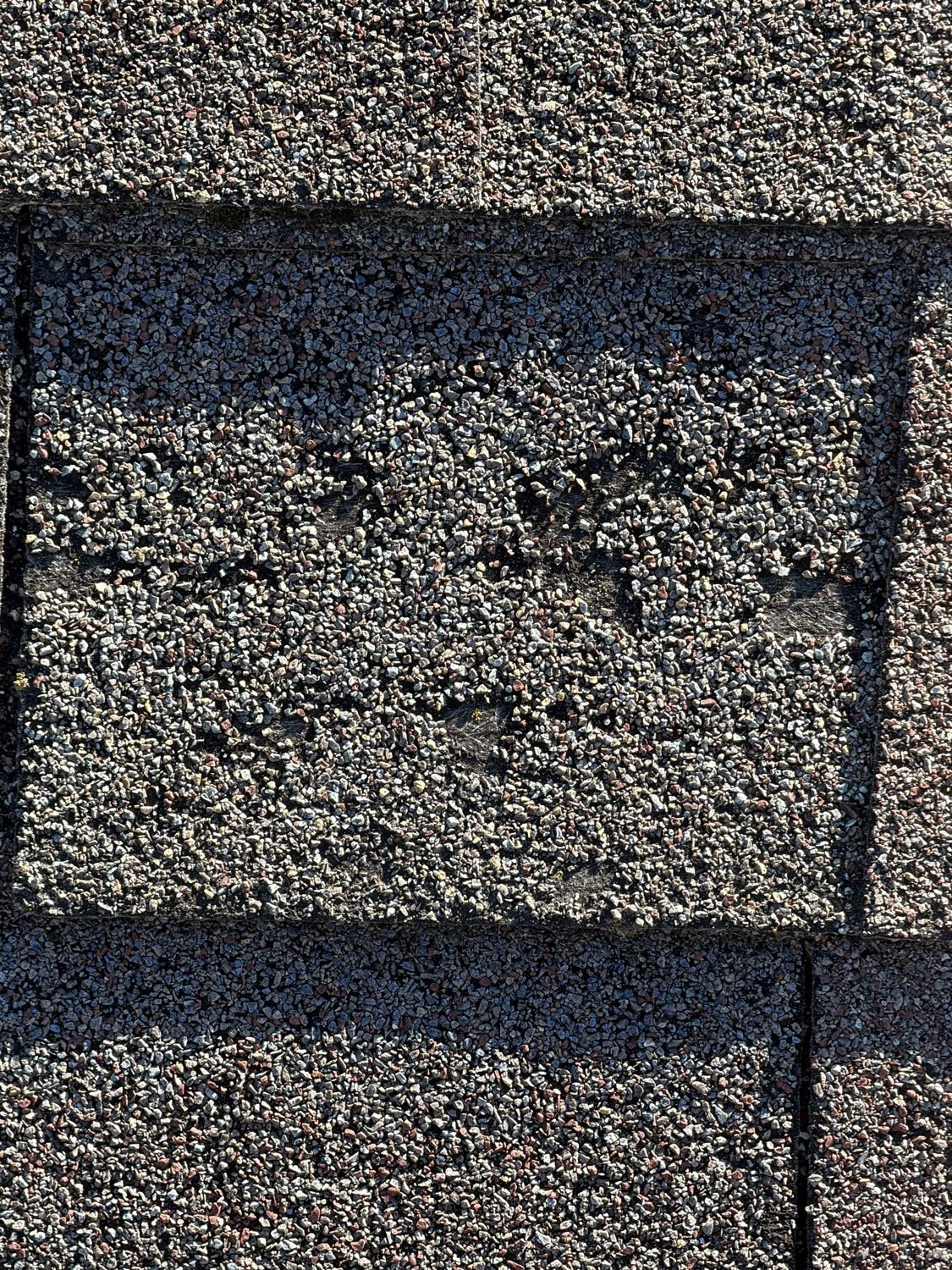
Across the slopes we also documented scattered impact marks with granule loss — a pattern consistent with possible hail damage. Granules are the shingle’s protective surface; where impacts knock them loose, the asphalt underneath is exposed to the sun and ages faster. Whether the damage is functional is a call for a roofing contractor’s closer evaluation — it is documented here so the buyer has it in hand.
The kitchen, and under the sink
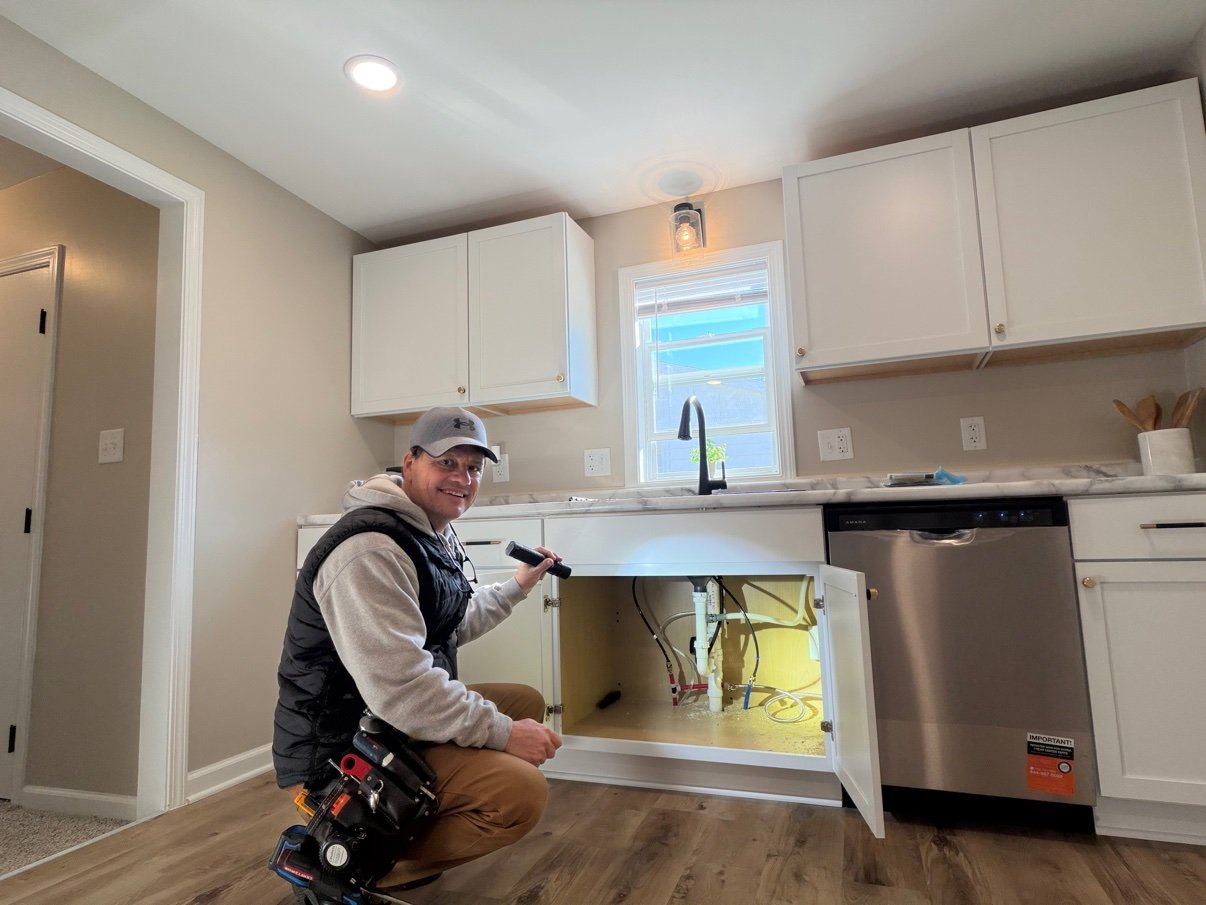
Every sink cabinet gets opened. Under the kitchen sink we check the supply connections, the drain and trap, the dishwasher hookup, and the cabinet floor for staining or soft spots that show a leak has been there — sometimes long before it ever shows up as a drip. Small plumbing leaks are among the most common findings in homes of every age, and they are cheap to fix early and expensive once they have had a year to soak into a cabinet floor and subfloor.
The systems pass
From there the inspection works through the rest of the house the same way: the electrical panel and a sampling of receptacles, the furnace and water heater, the visible plumbing, windows and doors, and the exterior — siding, grading, and the roof, which we document from the ground and, when it helps, from the drone. The inspection covers what is visible and accessible at the time; we do not open walls, and we do not guess at what is behind them. What we can see, we document — with photos, so the report shows you the same thing we saw.
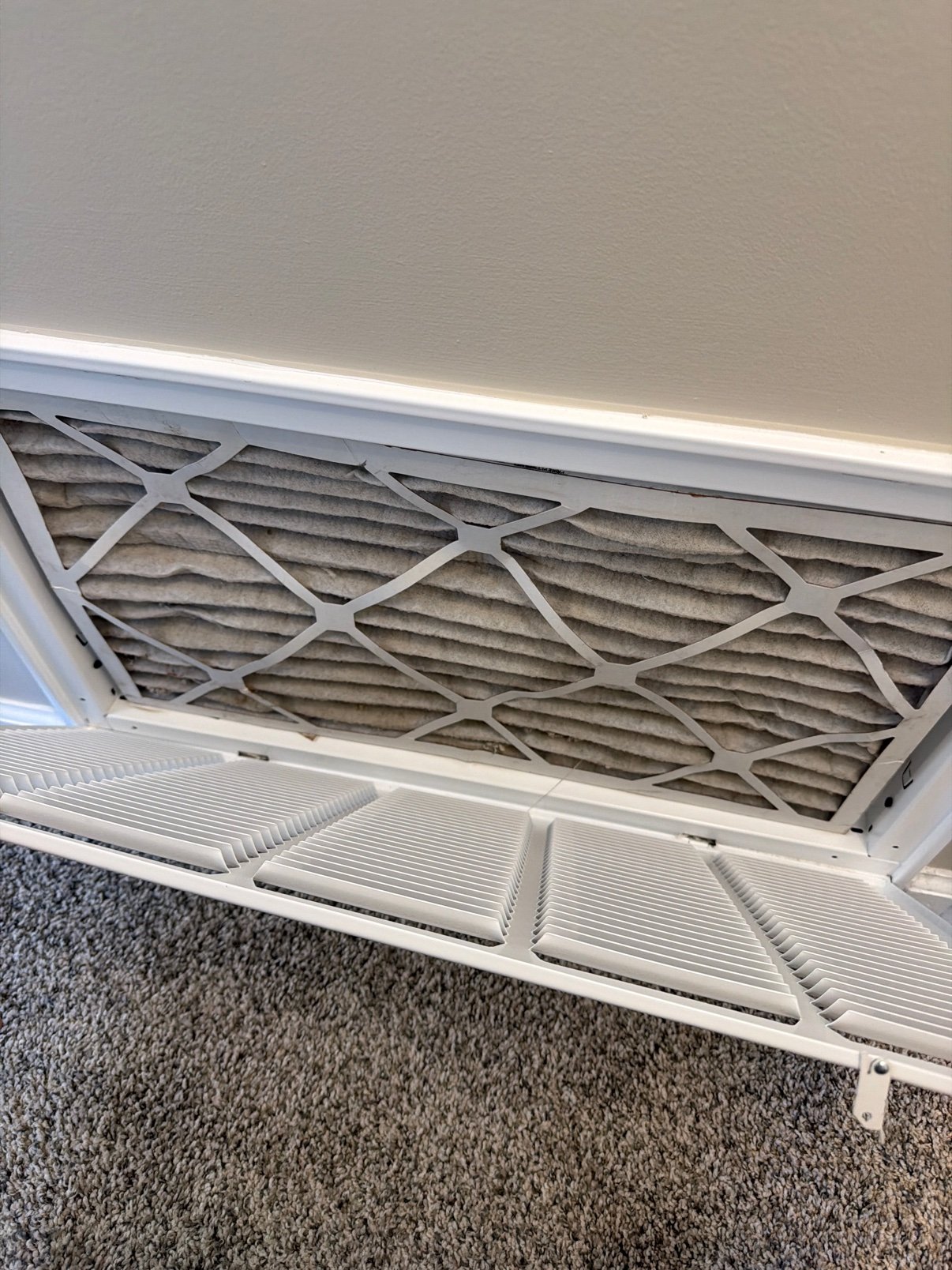
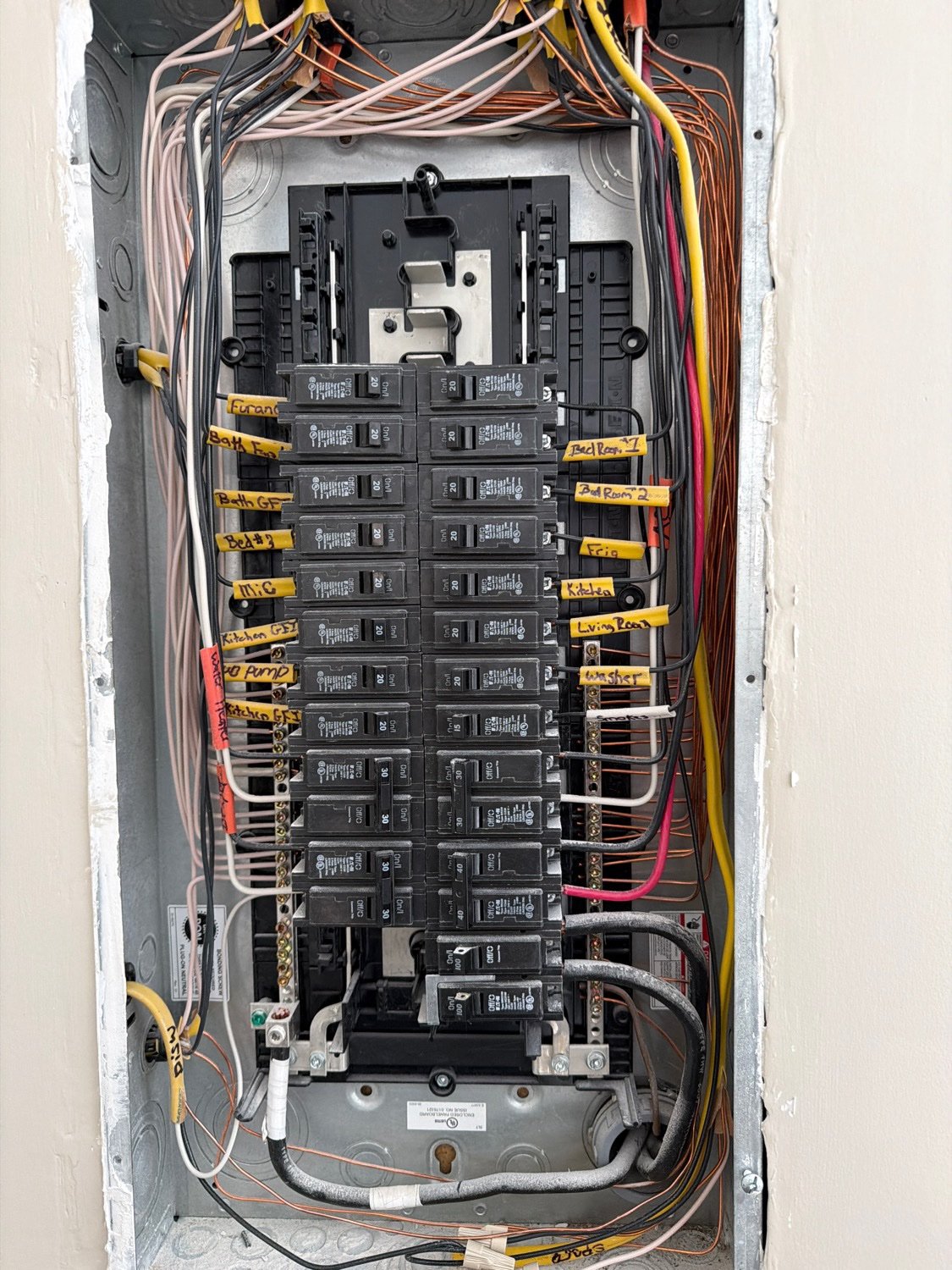
The panel held this inspection’s most serious finding. This panel has no breaker at the main position — instead, the service is fed through two 100-amp breakers at the bottom of the panel, and those two breakers are not tied together. A main disconnect has to shut off both legs of the service in one motion; untied, one side can be switched off while the other stays live. It goes in the report for a licensed electrician to correct with a proper two-pole main breaker.
How the day ends
Near the end of the inspection, the buyers join us for a wrap-up: everything we found, gone over on site, with every question answered before we leave. The written report follows the same day, in plain language, with photos throughout. If you are buying in Lynn, you can see what an inspection covers on our home inspection page, what it costs on our prices page, and more about inspections in town on our Lynn page. With two inspectors on our team, we can typically get your inspection scheduled inside the 7-to-10-day inspection response window in your purchase contract.
Certified Home Inspection LLC has been inspecting homes in Richmond, Lynn, and across East-Central Indiana and West-Central Ohio since 2004.